Echeveria Black Prince
Echeveria Black Prince generally flowers in early Autumn. The flowers are a beautiful blood red colour and the rosette itself can grow up to 15

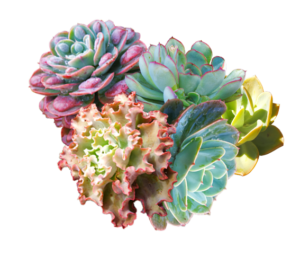
Echeveria Black Prince generally flowers in early Autumn. The flowers are a beautiful blood red colour and the rosette itself can grow up to 15
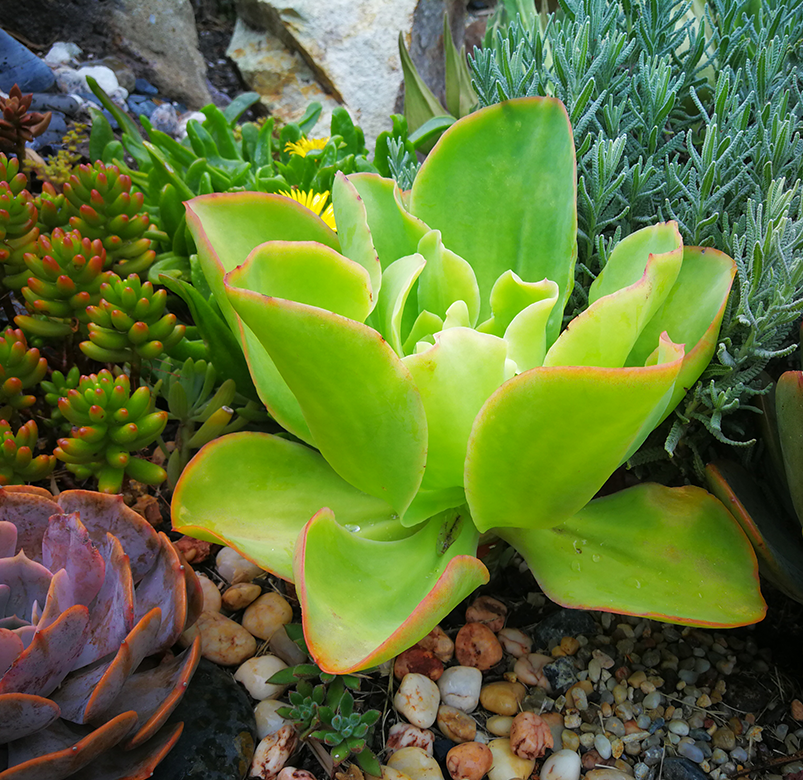
Echeveria Pallida can grow up to 50cm tall, with spoon shaped leaves of lime green colour. Generally flowering in winter, Pallida’s inflorescence of blue/green –
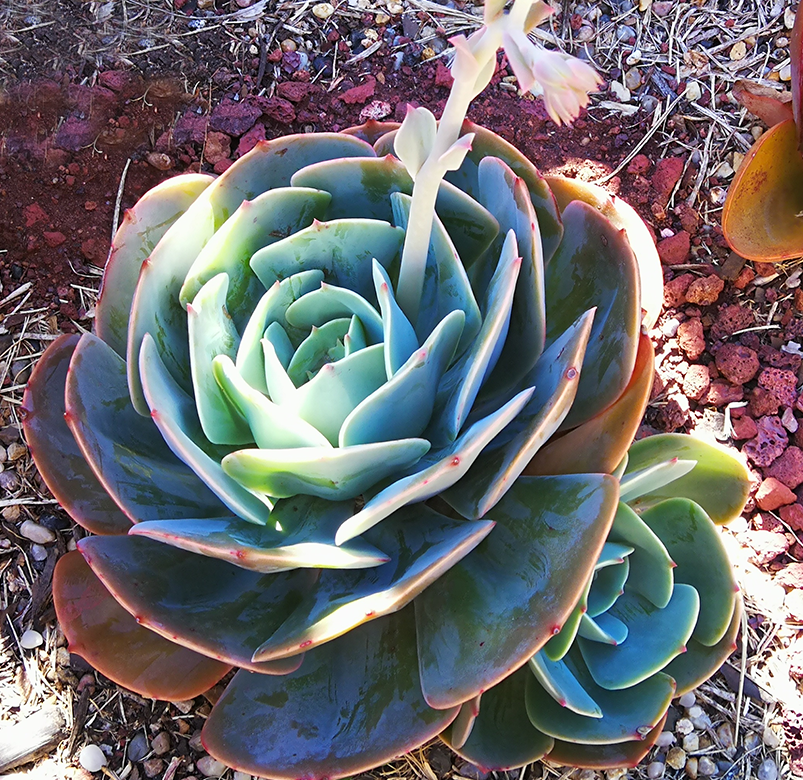
Sometimes referred to as ‘Blue Rose Echeveria’ , Echeveria Imbricata is one of the most prolific growers and bloomers of its genus. Commonly developing flower clusters
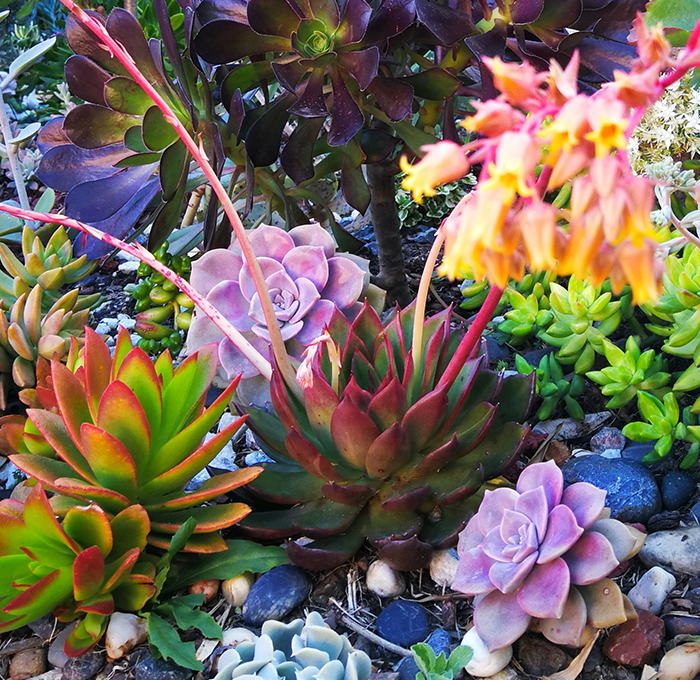
Echeveria Benimusume can grow to about 20cm tall and 10cm wide. Flower stems can grow up to 50cm in length and it will throw several
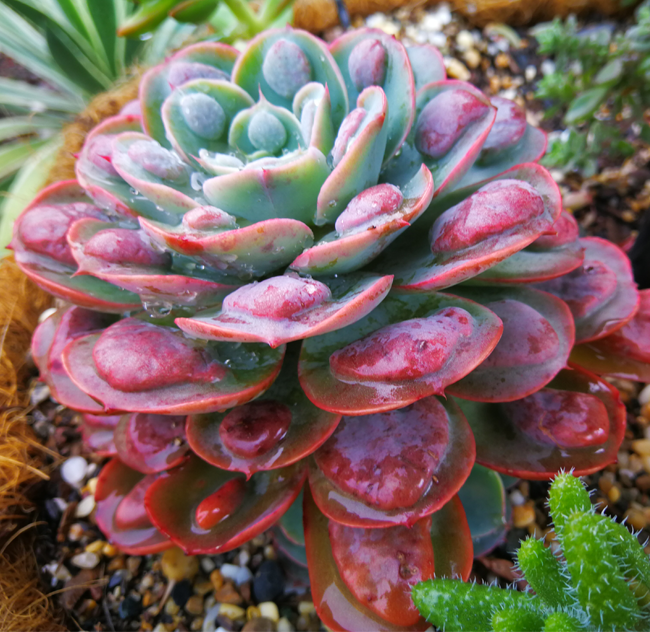
As Echeveria ‘Raindrops’ ages, the leaves develop blue-green bumps in the middle of each leaf towards the tip that look similar to raindrops, hence the